
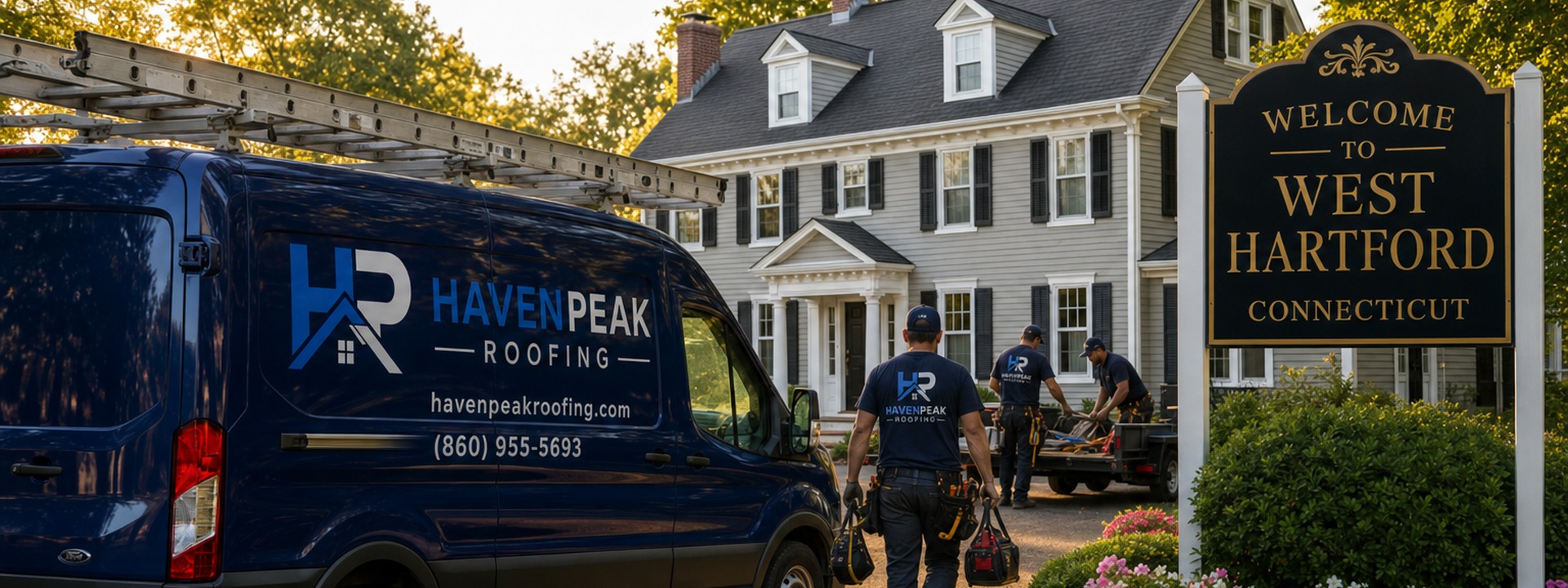
Roof Replacement Built Around Your Home’s Structure
Replacing a roof is more than swapping shingles. We plan tear-off, deck condition, ice barriers, and ventilation together so the new system handles Greater Hartford snow, wind, and freeze-thaw cycles as one assembly.
Signs a West Hartford Roof Is Ready for Replacement
Curling or clawing shingles across multiple slopes usually means the mat is absorbing moisture and the seal strips are failing. Widespread granule loss—bare spots visible from the yard—shortens remaining life even if leaks have not started yet.
Daylight visible in the attic between boards, sagging ridge lines, and rust streaks below nail heads point to deck or fastening issues that repairs cannot stabilize. On homes built before 1980 in West Hartford Center, original decking may be board sheathing that needs selective replacement during tear-off.
If you are buying or selling in Hartford County, an inspection that flags underlayment age, multiple prior layers, or chronic ice staining often triggers replacement planning before the next winter.
Interior clues matter too: recurring ceiling stains after every thaw, musty attic insulation, and visible sag at ridge boards suggest the assembly—not just surface shingles—has reached its limit.
Replacement vs. Repair: How We Help You Decide
Repair wins when damage is isolated and the field still has even color, flat lay, and firm edges. Replacement wins when failures repeat, when two layers already exist, or when underlayment has outlived the covering you see from the street.
Cost spread matters over time: three repair visits in five years can approach a partial slope replacement without solving ventilation or deck issues underneath. We compare scenarios with rough remaining life estimates rather than pushing a single answer.
Insurance may fund slope replacement after storm damage while leaving sound slopes in place. We document test squares and matching rules so partial projects still drain and ventilate correctly.
If you plan to stay ten more years, replacement math often beats serial repairs. If you are selling within two years, a documented inspection helps you choose between disclosure, credit, or proactive reroof.
What a Complete Replacement Includes
Every layer has a job in Connecticut’s climate.
- Tear-off of existing layers down to deck (unless code allows otherwise)
- Ice and water barrier at eaves, valleys, and critical penetrations
- Synthetic or felt underlayment across the field
- Starter strip, field shingles or panels, ridge venting, and hip caps
- Metal drip edge, valley flashing, and pipe boot replacements
- Balanced intake and exhaust ventilation matched to attic volume
- Manufacturer-specified fasteners and wind-zone nailing patterns
- Ice barrier width tailored to eave overhang and valley length
Tear-Off Planning and Site Protection
Tear-off day is loud and messy; planning keeps debris off lawns and out of neighbor yards. We use tarps and plywood paths over gardens common on Queen Anne homes near Prospect Avenue. Dumpsters sit on driveways when possible to avoid street permits.
Removing two layers adds weight and time but reveals deck condition hidden for decades. We note rotted sheathing at eaves where ice sat for years—common on north-facing slopes in West Hartford hills.
Chimney, satellite, and solar mounts get temporarily supported or removed and reflashed as part of the sequence so nothing is an afterthought.
Magnetic nail sweeps and daily cleanup reduce tire and foot injuries on tight West Hartford driveways. We stage tear-off so exposed decks are never left open overnight without dry-in when rain threatens.
Deck Repair and Sheathing Replacement
OSB and plywood decks swell when moisture enters through failed underlayment. Soft spots near skylights and dormers are cut out and sistered to solid framing before new covering goes on.
Board sheathing on older homes may need gap adjustments or overlay with plywood to meet current fastening schedules. We do not cover spongy decking; it compromises nail pull-through in wind events.
Attic inspection during tear-off confirms whether staining is historical or active. Vent baffles get installed or replaced when insulation blocks soffit paths—a frequent find in capes around Still Road.
Selective deck replacement is common at chimney corners and skylight openings where slow leaks rotted plywood over years. Full redeck is rare but quoted if widespread delamination appears.
Material Options for Hartford County Homes
Architectural asphalt shingles remain the most common choice on pitched roofs here, with impact-resistant lines worth considering under tree cover. Metal panels and standing seam suit certain colonial renovations and long-term snow shedding on steep pitches.
Low-slope sections above sunrooms or garages may use TPO, EPDM, or modified bitumen integrated with pitched transitions. Tile is rare but appears on custom builds; underlayment quality matters more than the tile surface in freeze-thaw zones.
Color and profile selections should respect HOA packets in communities like Kingswood or older historic guidelines near the town center. We provide physical samples when boards require approval.
Energy and attic goals may influence vent selection and radiant barriers—decisions made before materials are ordered, not after shingles are on the truck.
Homeowner Preparation Before Installation Week
Clear attic storage beneath the roof line when possible so crews can inspect decking from inside. Park vehicles away from the driveway drop zone and protect fragile landscaping with movable pots.
Notify neighbors about dumpster placement and work hours—Connecticut towns often restrict early noise. If you work from home, plan for vibration on upper floors during tear-off.
Pets and children should stay clear of the yard while magnets sweep for nails. We communicate daily start times and weather holds when rain threatens open decks.
Interior protection—closing attic hatches, covering stored items, and shutting windows on the work side—reduces dust intrusion during vibration-heavy tear-off.
Typical Replacement Sequence
Order matters for waterproofing and warranty compliance.
- Protect property, remove existing roofing to deck
- Replace damaged sheathing; install ice barrier and underlayment
- Set drip edge, starters, and field application per wind zone
- Flash penetrations, walls, and valleys before ridge vent install
- Clean up, magnet sweep, and final attic/roof walkthrough
What Drives Replacement Cost in Greater Hartford
Square footage and pitch are the baseline. Steep colonial roofs with multiple dormers labor-intensive than simple ranch profiles in Elmwood. Layer count, deck replacement, and chimney reflashing add measurable line items.
Material tier—standard architectural versus designer or metal—affects both product and trim details. Ventilation upgrades and plywood overlay when required are separate from shingle bundles but essential to performance.
We provide itemized proposals so you can phase work if needed, though leaving a torn-off section open is never an option mid-project.
Accessory items—snow guards on metal, cricket builds at wide chimneys, and upgraded underlayment on vulnerable north slopes—appear as line items so you see value, not a single lump sum.
Pre-Replacement Checklist
Use this list before signing a contract.
- Confirm tear-off depth and disposal plan in writing
- Review ventilation design—not just shingle color samples
- Ask how chimney, skylight, and wall flashings are handled
- Verify matching rules if only part of the roof is replaced
- Understand weather delay policy and interior protection steps
Local Replacement Context
Snow load and ice dam history on north slopes near Reservoir No. 1 influence how much ice barrier we specify at eaves. Wind exposure on hilltop lots along Albany Avenue may require enhanced nailing patterns.
Town permit requirements and inspection schedules vary; we file when required and leave documentation for your records. Homes near the University of Saint Joseph and West Hartford Center often need careful staging on narrow streets.
Replacement is a chance to correct prior shortcuts—insufficient attic vents, mixed exhaust types, or porch tie-ins that never had proper counter flashing. We treat those as part of the system, not extras to ignore.
Post-install, we walk the roof with you when possible and leave care notes for the first season—what to watch after the first heavy snow and when to clear valley debris.
Roof Replacement FAQ
You May Also Need
Asphalt Shingle Roofing
Architectural shingle repair and replacement systems
Metal Roofing
Standing seam and metal panel roofing
Flat Roofing
Low-slope membrane repair and replacement
Roof Inspection
Pre-purchase, seasonal, and post-storm roof assessments
Roof Maintenance
Seasonal maintenance, ice dam risk, ventilation checks
Request a Replacement Assessment
Share your roof age, material type, and any recent leaks or storm events in West Hartford.