
Quick Answer
Repair fits when damage is localized—one slope, a failed boot, or wind-lifted tabs on an otherwise sound roof. Replacement makes sense when multiple slopes show curling, granule loss, soft decking, or repeated leaks after prior patches. Age alone does not decide; inspection photos of each slope and attic decking do.
Why the Decision Is Harder in Connecticut
West Hartford homeowners ask every winter whether a bedroom stain means a fifty-dollar boot or a full tear-off. The honest answer is rarely visible from the curb. Connecticut roofs fail in predictable patterns—ice backing up at cold eaves, wind lifting ridge caps during nor'easters, brittle asphalt tabs after decades of freeze-thaw—but each house mixes those factors differently.
A colonial near the Center may show wear only on the north ice zone while south slopes still have usable life. A cape in Elmwood with two existing shingle layers may face code limits on another overlay. Split-levels with low-slope porch tie-ins leak at transitions while main slopes look fine. Guessing wastes money: a cheap patch before a February storm often leads to soaked insulation and a replacement quote that should have happened in October.
This guide explains what we look for during inspection, how Hartford County weather changes the math, and when documentation helps with insurance or a home sale.
When Repair Makes Sense
Localized wind damage on an otherwise sound roof is a classic repair case: replace torn tabs, reseal adjacent courses, and verify neighboring shingles still adhere. Single-slope hail or branch impact on newer architectural shingles often qualifies when underlayment tests dry at the repair zone.
Flashing-only failures around chimneys, dormers, and skylights frequently justify targeted repair when field shingles remain thick with granules. Pipe boot replacement in fall is inexpensive compared to emergency winter calls. Valley metal that has pulled away without widespread shingle brittleness is another repair scenario we see on homes in Farmington and Bloomfield.
Repair estimates should name the failure mechanism—not just a line item for shingles. You should receive photos of the specific boot, valley, or wind-damaged area before approving work.
When Replacement Is the Better Investment
Replacement enters the conversation when multiple slopes show curling, widespread granule loss, or repeated leaks after prior patches. Two layers of shingles already in place may require tear-off rather than another overlay—building code and manufacturer rules guide that call, and we document layer count before quoting.
Soft decking, sagging ridges, or dark moisture staining across large attic areas move the scope beyond patching. Widespread brittle tabs that crack when walked for maintenance indicate systemic age—not an isolated failure. Homes built in the 1980s and 1990s across Manchester and East Hartford often reach this point on twenty-five- to thirty-year shingles.
A full roof replacement also makes sense when you are correcting chronic ice dam conditions with proper ice-and-water membrane, balanced ventilation, and ridge vent upgrades that cannot be installed properly without tear-off.
What Inspection Evidence Should Show
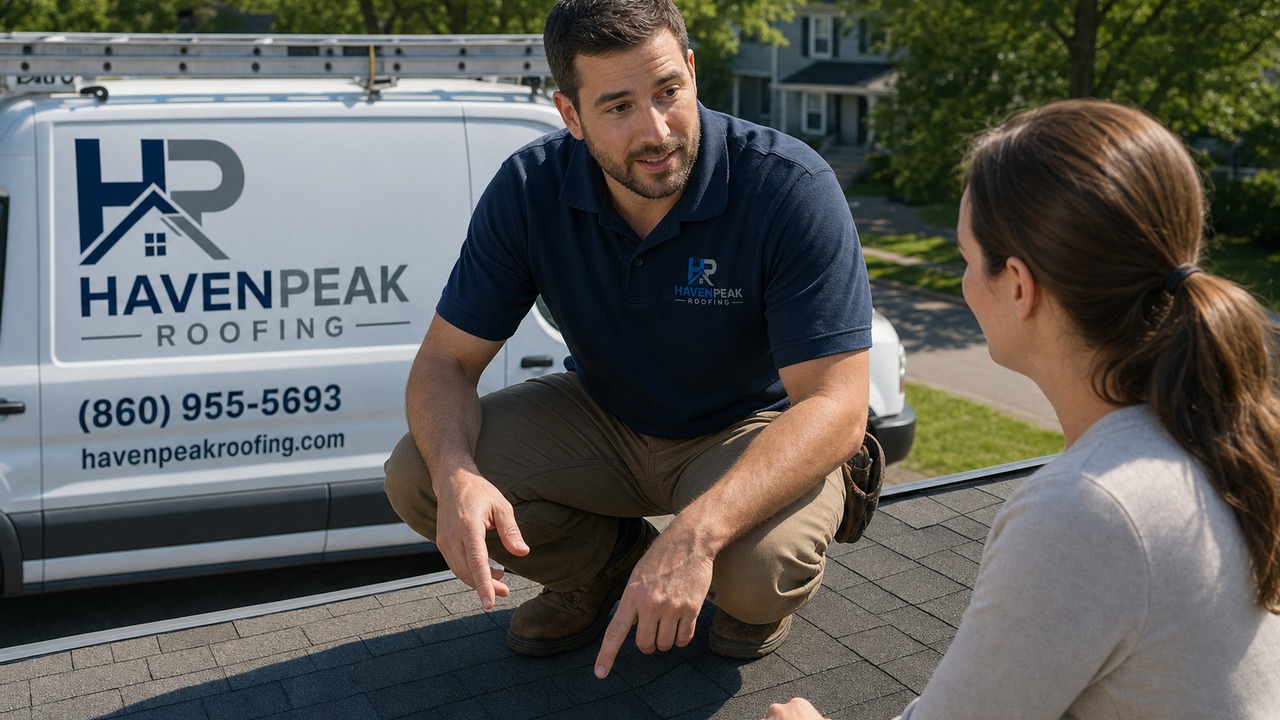
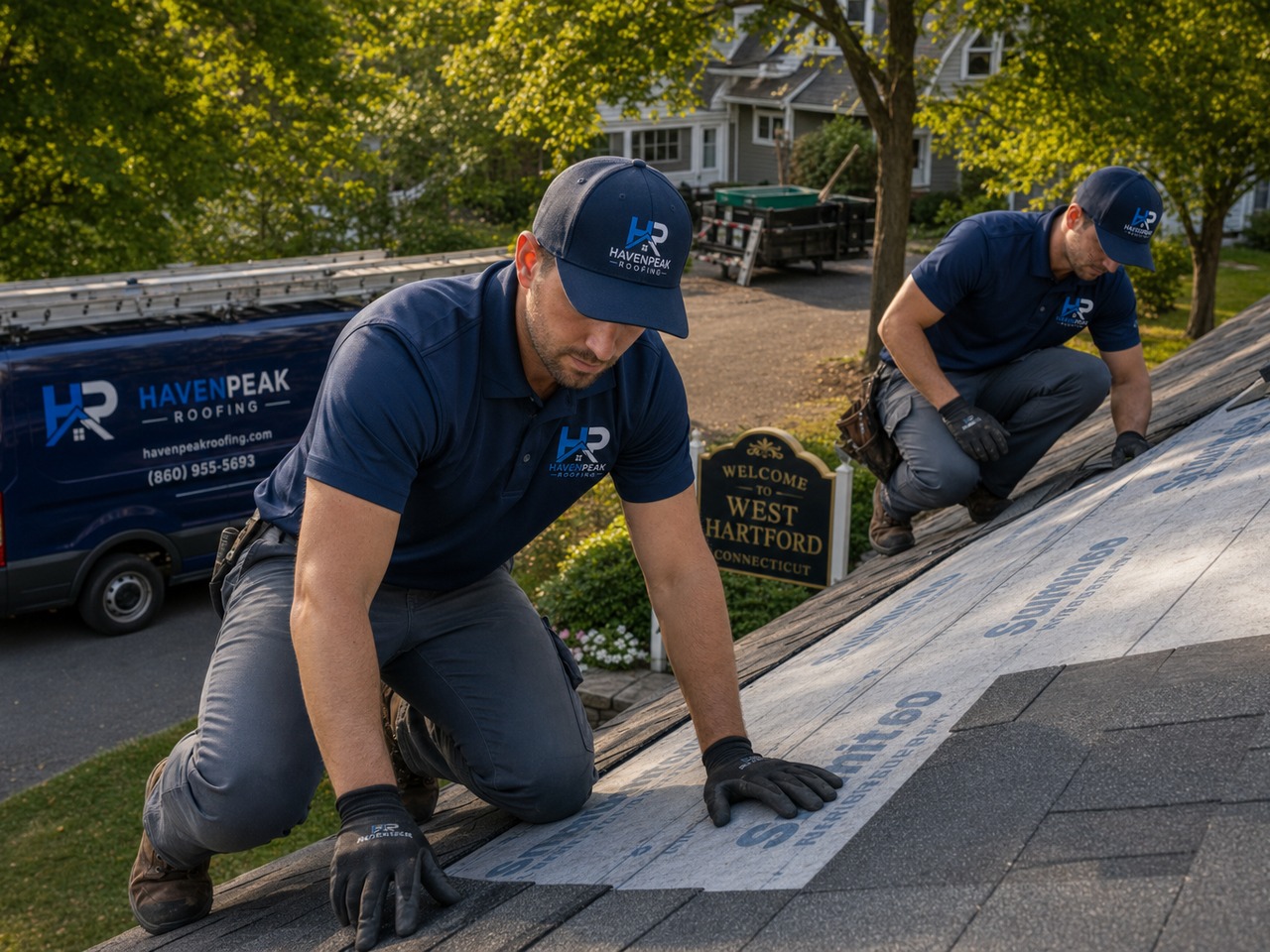
Ground photos miss lifted ridge caps and slipped step flashing. A proper roof inspection walks the roof when safe, checks every penetration, and reviews the attic for daylight, moisture staining, and compressed insulation that signals heat loss driving ice dams.
We note each slope separately on colonials and gables because wear differs between north ice zones and sun-faded south faces. Flat porch tie-ins common on split-levels get probed at membrane seams and transitions to the main pitch. You should receive written findings with photos—not a verbal recommendation without documentation.
Compare that report if you seek a second opinion or involve an adjuster after storm damage. Honest documentation protects you whether the outcome is repair or replacement.
Timing, Insurance, and Selling Your Home
Fall is the practical window for replacement planning before sustained cold limits adhesive bonding on asphalt systems. Spring works well for storm damage repair after nor'easters pass. Winter patches can stabilize leaks, but permanent shingle work often waits for suitable temperatures unless emergency tarping is the interim step.
Insurance coverage varies for sudden wind or ice damage versus long-term wear. We document what we see without inventing damage; your adjuster interprets the policy. For home sales in West Hartford and nearby towns, buyers increasingly request roof documentation—a repair with photos and remaining-life notes may satisfy inspection when five to ten years of service remain.
Compare bids on scope, not just bottom line. Tear-off depth, deck repair allowance, ice barrier at eaves and valleys, and permit expectations for your municipality should appear in writing. Schedule a roof inspection from our West Hartford office or call (860) 955-5693.
How Local Housing Stock Affects the Decision
West Hartford colonials along streets near the Center often carry complex roof planes—main gable, shed dormers, and porch tie-ins that age at different rates. A stain in a second-floor bedroom may trace to a dormer boot while main slopes still have service life. Documenting each plane separately prevents a whole-roof quote when one detail failed.
Ranches and split-levels in Elmwood and Bishops Corner frequently show porch membrane failure while pitched fields remain sound. Repairing the low slope and transition flashing may resolve the leak without touching the main shingle system. Homes in Newington and Rocky Hill share similar split-level geometry—inspect transitions before assuming full replacement.
When in doubt, start with inspection photos and a written recommendation tied to specific slopes and penetrations. That evidence supports second opinions, insurance discussions, and pre-sale disclosures without committing to scope before you understand what actually failed.
Related reading
Related service: Learn more about this roofing service.
Related guide: Planning a Roof Replacement in Connecticut: Timeline, Scope, and Permits.
FAQ
Sometimes, when other slopes have verified remaining life and matching shingles are available. Color fade on sun-facing slopes may show a slight mismatch with new bundles.
No. Stains often trace to a single failed boot, ice dam backup, or flashing issue on an otherwise sound system. Attic and exterior photos determine the cause.
Connecticut code typically allows one overlay before tear-off is required. We verify layer count during inspection before quoting recovery versus full tear-off.
Documented repairs with photos may satisfy buyers when the roof has years of life left. Widespread brittleness or active leaks often push sellers toward replacement for a clean closing.
Patching repeatedly without diagnosing the mechanism—especially ice dam conditions that will return every winter until ventilation and eave details are corrected.
Need help with your roof in Connecticut? Contact HavenPeak Roofing for a free estimate or call (860) 955-5693. We serve West Hartford, Greater Hartford Area, and nearby Connecticut communities.
Browse our Roofing Insights hub and Roofing Solutions catalog for more Connecticut winter guides, emergency services, and city-specific roofing pages.