
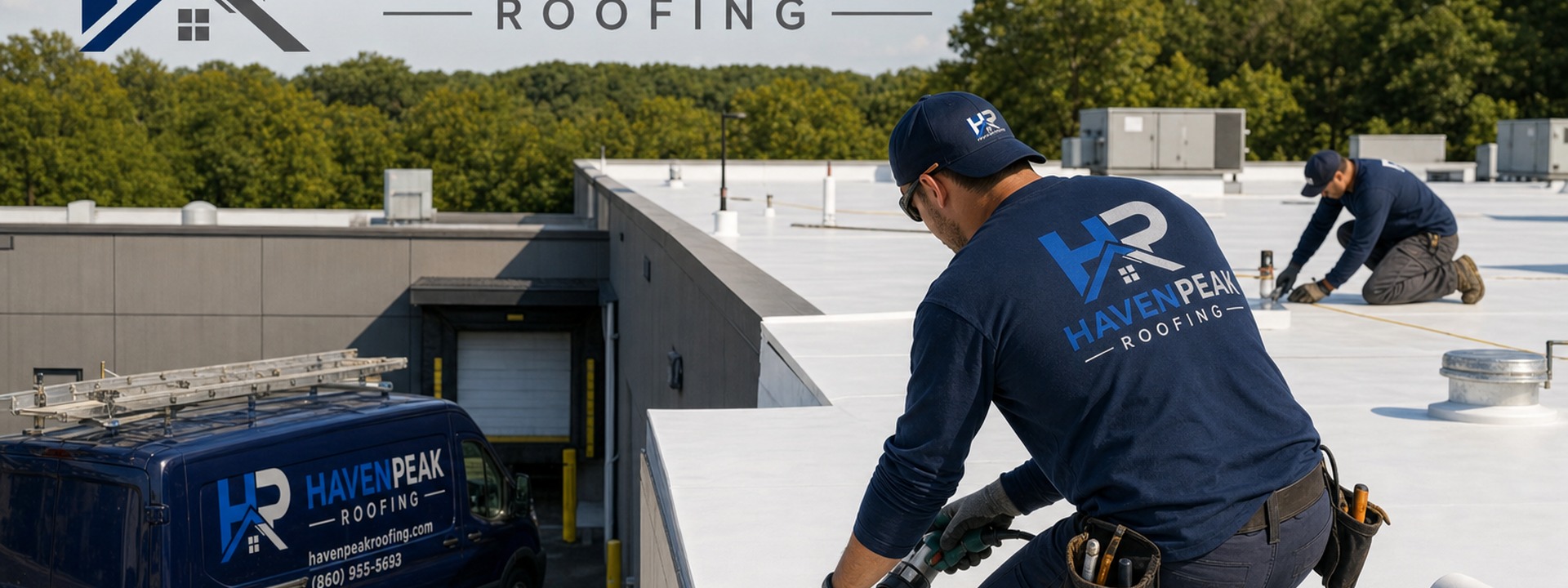
Flat and Low-Slope Roof Repair That Holds Water Out
Porch roofs, garage tops, and commercial sections depend on drainage and membrane seams—not shingle overlap. We repair and replace low-slope systems with attention to ponding, flashing at walls, and tie-ins to pitched roofs on Greater Hartford properties.
Why Drainage Defines Flat Roof Performance
Water should reach drains or scuppers within minutes of rainfall. Sagged decking, crushed insulation, and clogged drains turn minor membrane wear into active leaks.
Leaders must discharge away from foundations—common trouble on brick colonials where porch drains tie into older gutter networks along Fern Street.
Positive slope to drains matters more than membrane brand when ponding persists.
Scupper overflow staining on brick walls often traces to roof drains, not window leaks.
Ponding Water and Deck Deflection
Standing water accelerates UV breakdown and invites debris that blocks flow. Photos after rain reveal low spots that dry maps miss.
Soft decking under ponds needs replacement before new membrane; otherwise deflection returns. We probe carefully around chronic pond centers.
Temporary pumping does not fix geometry—releveling or tapered insulation may be required on older porch conversions.
Flashing at Walls, Curbs, and Pitched Tie-Ins
Low-slope membranes terminate at walls with reglets or counter flashing. Pitch transitions at house walls are the leak point on many West Hartford rear porches.
HVAC curbs and parapet copings need separate maintenance cycles from field membrane. Caulk-only repairs fail when movement opens joints.
We rebuild transitions to shed water onto the membrane field, not behind it.
HVAC curb height affects how water sheds—low curbs pond before membranes fail.
TPO, EPDM, PVC, and Modified Bitumen
TPO heat-welded seams suit many commercial and residential low-slope sections. EPDM remains common on older porches with glued seams that age at edges.
PVC offers chemical resistance where grease or exhaust is nearby on mixed-use edges. Modified bitumen appears on built-up assemblies with cap sheets.
Repairs must match chemistry—EPDM patch on TPO is not acceptable. We identify existing systems before quoting.
White membranes show dirt but reflect heat; dark membranes hide stains but run hotter.
Flat Roof Inspection Methods
Walkovers note seam voids, shrinkage at terminations, and drain strainer blockages. Infrared or core cuts may be suggested on commercial sections when owners need insulation dryness confirmed.
Interior stains on porch ceilings below often align with tie-in flashing rather than open field seams.
Winter inspections may be limited to interior and drain review until ice clears.
Blisters may be dry cosmetic lifts or wet insulation below—probe tests clarify.
When to Patch vs. Replace the Membrane
Small punctures and localized seam failures patch when substrate is dry and adhesion is sound. Widespread alligatoring, multiple prior patches, or saturated insulation push toward replacement.
Adding slope during replacement solves chronic ponding that patches cannot fix.
We compare five-year outlooks honestly—third patch on a 25-year-old EPDM porch may be money toward replacement.
Overlay membranes save tear-off cost when decks test firm and codes allow.
Where Low-Slope Roofs Appear Locally
Rear porches on colonials, garage brows, and dormer tops mix with pitched roofs on the same property. Condo and townhome rows along New Britain Avenue use flat sections at rear additions.
Small commercial plazas in Elmwood and Park Road corridors need drain maintenance contracts more than homeowners realize.
Green roof and deck overlays are uncommon here; most failures are basic drainage and flashing neglect.
Local Flat Roof Challenges
Nor’easter wind drives rain into parapet corners on mixed-use buildings near West Hartford Center. Ice blocks drains on shaded porches until melt floods seams.
Tree debris from maples along residential streets clogs strainers faster than open commercial roofs.
Permits for structural deck repair on porches keep projects compliant when rotted joists are discovered.
Split-level homes in the Acre may have different shingle ages on upper and lower roofs—we note both.
Metal accents on front elevations with asphalt rears are popular on renovated colonials—we flash both materials.
Rear porches on Park Road colonials often hide ponding invisible from the street.
Crane staging on narrow West Hartford lots may require neighbor notice before delivery day.
Flat Roofing FAQ
You May Also Need
Commercial Roofing
Low-slope commercial systems — secondary focus
Roof Flashing & Waterproofing
Flashing, transitions, ice barrier, chimney interfaces
Roof Repair
Localized roof repair for leaks, wear, and storm damage in Greater Hartford
Roof Maintenance
Seasonal maintenance, ice dam risk, ventilation checks
Request Flat Roof Help
Describe ponding, stains, or roof type if known—and your West Hartford address.