

Quick Answer
After a nor'easter, stay off the roof and away from downed lines. Photograph missing shingles, lifted edges, and interior stains from ground level. If rain or thaw is forecast and water is entering, call for emergency tarping. Schedule professional inspection before signing with out-of-area crews who may not honor warranty work later.
How Nor'easters Test Roofs Differently
Connecticut nor'easters combine sustained wind, driving rain, heavy wet snow, and rapid freeze-thaw in a single event. That is harder on roofs than a summer thunderstorm that passes in an hour. Shingle seal strips stiffen in cold; ice forms under lifted edges overnight; branches snap onto low-slope porch sections that were already aging.
Inland Greater Hartford sees heavy snow load and gusts along open ridges in towns like Windsor and Enfield. Wind-driven rain pushes sideways into gable ends and headwalls on homes that rarely see direct uplift during ordinary weather. The first forty-eight hours after a major storm matter for safety, documentation, and temporary dry-in.
Understanding that timeline helps you protect your home and build an honest insurance file without climbing into unsafe conditions.
The First 48 Hours After the Storm
Day one: Ensure family safety. Stay clear of downed utility lines, hanging branches, and sagging porch roofs. Photograph missing shingles, lifted tab edges, ridge damage, ice lines, and interior stains from ground level or through windows—date-stamped if your phone allows.
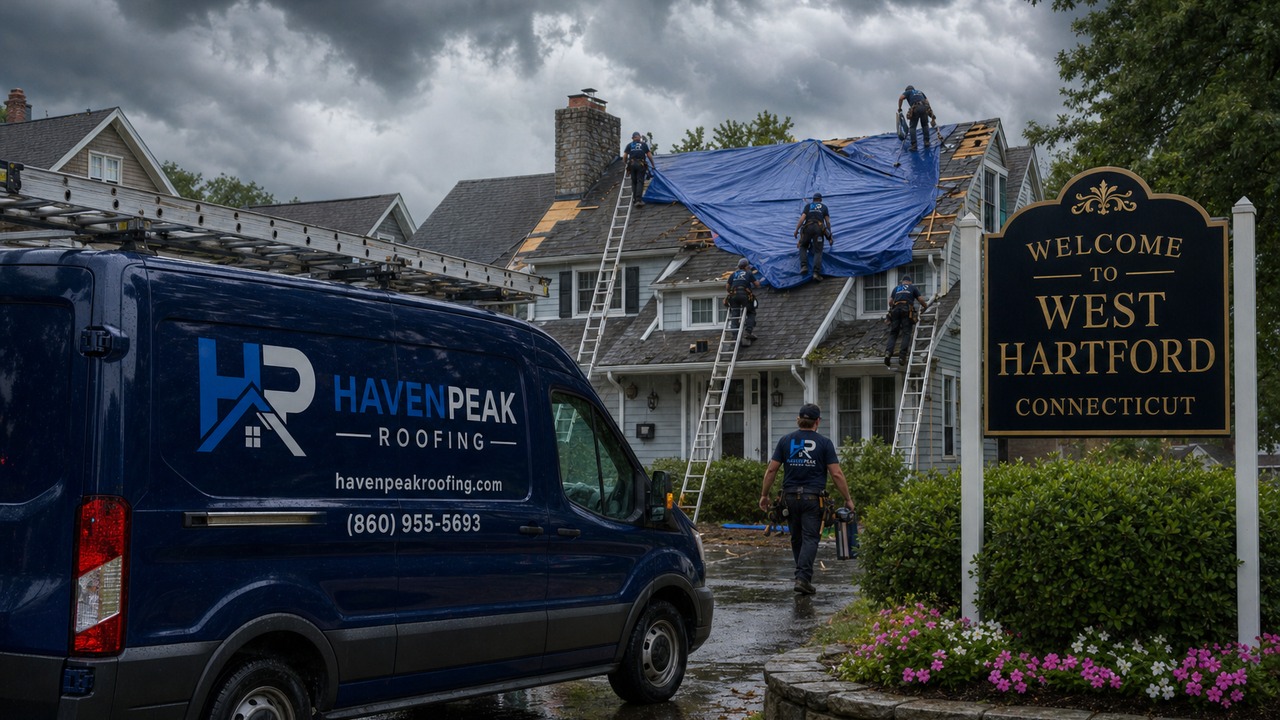
Day two: If rain or thaw is forecast and water is entering, call for emergency tarping when active leaks threaten ceilings or electrical areas. Interior buckets and furniture covers remain appropriate while you wait. Do not climb to tack plastic in wind.
Day three: Schedule a professional post-storm inspection before committing to permanent repair. Stabilization can happen quickly; full shingle replacement should follow documented findings—not a door-to-door pitch before anyone has walked the roof.
Common Damage Patterns We See
Wind lifts ridge caps and breaks seal strips on three-tab shingles still common on older stock in Hartford and New Britain. Valley metal pulls away when gusts combine with debris impact. Branch strikes puncture shingles and decking in valleys or on low-slope porch sections where impact is invisible from the street.
Even small punctures widen with freeze-thaw until the next rain. Ice dams that form during the storm's temperature swings can back water under shingles at eaves already stressed by wind. Document each area separately—wind uplift and ice intrusion may have different insurance considerations.
Our storm damage repair process starts with photos tied to specific slopes and penetrations, then moves to a written scope for permanent work.
Avoiding Storm-Chaser Red Flags
After major events, out-of-state crews knock on doors offering fast fixes and pressure to sign the same day. Some are legitimate; many leave homeowners with incomplete tarp jobs, no permit, and a phone number that stops working when the next storm hits.
Warning signs include requests for large upfront cash, promises to waive deductibles illegally, refusal to provide Connecticut licensing and insurance certificates, and reluctance to put scope in writing. Choose contractors who document findings clearly, pull permits when required, and can show recent Greater Hartford references.
Verify contractor registration through the Connecticut Department of Consumer Protection before large deposits—especially when unfamiliar trucks flood neighborhoods after widespread damage.
From Tarp to Permanent Repair
Temporary dry-in is not a substitute for proper repair. Match materials to wind and ice exposure for your property. Higher wind-rated shingles and secure ridge fastening matter on open ridges. Ice-and-water membrane at eaves belongs in the conversation when backup damage appeared during the storm.
Tree trimming near rooflines reduces repeat punctures but does not fix uplift at ridge and headwall. If decking is soft from prior leaks, include deck repair in the scope before new shingles hide ongoing moisture.
Contact your insurer promptly when damage may exceed your deductible, but avoid rushing into permanent repair contracts before inspection confirms scope. A written storm date and photo set supports both claim files and contractor quotes. Keep interior photos even after tarping—adjusters often ask for before-and-after context.
Store inspection PDFs and photos with your home insurance file. When you sell, buyers' inspectors reopen the same questions—clear post-storm documentation shortens negotiations. Schedule a roof inspection from our West Hartford office or call (860) 955-5693.
Interior Signs That Point to Roof Damage
Ceiling stains after a nor'easter do not always sit under the exterior damage point. Water follows decking and joists before it drips inside. Note whether stains appeared during driving rain, after wind subsided, or during a thaw following ice buildup—each pattern suggests a different exterior mechanism.
Peeling paint at exterior wall corners, damp attic insulation near the eave, and musty odor at the hatch can precede visible ceiling damage. Walk through upper floors after major storms even when no active drip is present; early detection limits drywall and insulation replacement scope.
If multiple rooms show symptoms, the failure may be at a valley, ridge, or chimney rather than a single tab. Professional leak tracing maps the path before repair scope is set—especially on multi-plane roofs common in Greater Hartford colonials.
Keep children and pets away from rooms with sagging ceilings or active drips. Document who was notified—landlord, association, or insurer—and when, so follow-up conversations have a clear timeline after the storm passes.
Related reading
Related service: Learn more about this roofing service.
Related guide: Emergency Roof Leak Guide for Connecticut Homeowners.
FAQ
Not necessarily. File when documented damage exceeds your deductible and involves sudden wind, impact, or ice intrusion—not gradual wear you knew about before the storm.
Emergency tarping happens in any weather. Permanent asphalt shingle work often waits for suitable bonding temperatures unless the repair is small and properly specified for cold application.
No. Lifted tabs, slipped flashing, and valley punctures from branches are often missed without a roof walk. Professional inspection finds what ground photos miss.
Quality emergency tarping is meant as interim protection—weeks, not years. Plan permanent repair promptly to avoid UV breakdown of temporary materials and secondary deck damage.
Many municipalities require permits for substantial re-roofing. Your contractor should confirm local requirements in West Hartford or your town before work begins.
Need help with your roof in Connecticut? Contact HavenPeak Roofing for a free estimate or call (860) 955-5693. We serve West Hartford, Greater Hartford Area, and nearby Connecticut communities.
Browse our Roofing Insights hub and Roofing Solutions catalog for more Connecticut winter guides, emergency services, and city-specific roofing pages.