
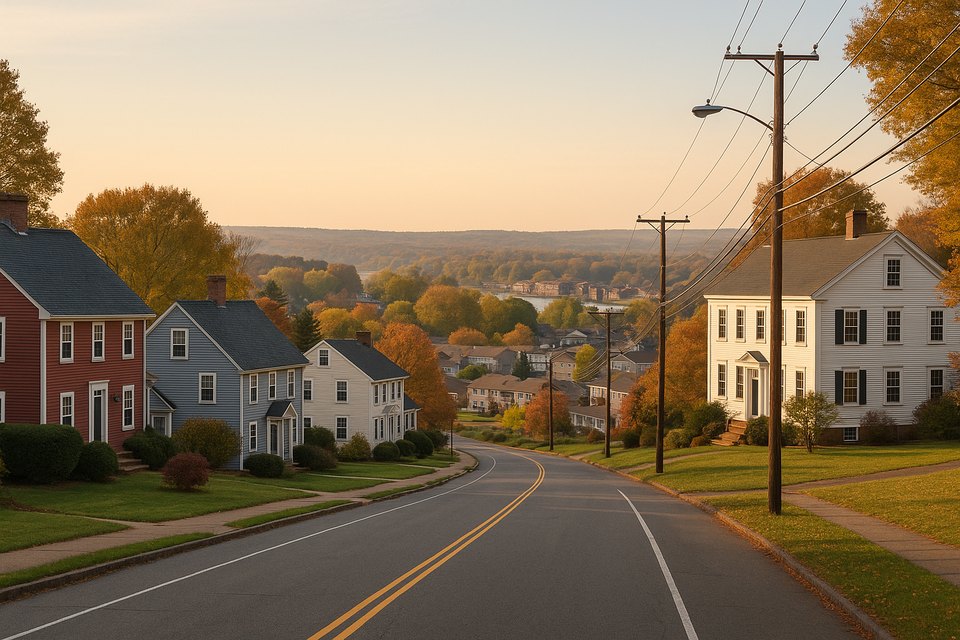
Roofing for Rocky Hill's River Valley Housing
Rocky Hill sits in the Connecticut River valley with ranches, colonials, and condo clusters where drainage paths, flashing tie-ins, and mixed roof pitches fail differently than on a single gable. We serve the town from 65 Memorial Rd in West Hartford.
How Water Moves on Rocky Hill Roofs
Valley housing here often combines a main pitched roof with lower porch, garage, and breezeway planes. Water concentrates at tie-ins where two slopes meet, and in valleys that drain slowly when leaves from river-corridor trees accumulate each fall.
Condo clusters along Silas Deane Highway and near the river share gutter runs and downspout paths—blockages upstream can affect multiple units before any single owner notices field shingle wear. Inspection should trace runoff from ridge to gutter to grade, not assume the stain on a ceiling sits directly under a torn tab.
Split-level and side-garage layouts shed water toward lower roof sections that hold snow longer than steep main pitches. When gutters overflow during heavy rain, fascia and soffit cavities absorb moisture long before shingles look bad from the street.
Flashing Failures on Valley Ranches and Condos
Step flashing at dormers, sidewall intersections, and chimney bases fails before open field shingles on many 1970s–1990s ranches. Original galvanized or painted flashing oxidizes at nail lines; sealant patches from prior owners crack after a few freeze-thaw cycles.
Condo buildings add shared wall flashing where unit boundaries meet—water that enters at a party line can show up two units away from the actual penetration. Garage-to-house transitions use counter-flashing that separates when the lower roof settles differently than the main structure.
Pipe boots, skylight curbs, and ridge vent terminations are mechanical weak points we inspect closely on Rocky Hill stock. Rebuilding a chimney detail correctly often costs less over five years than repeated interior patch cycles.
Roof Age Patterns Across Rocky Hill
Many roofs here are on second or third shingle generation, with different remaining life on each slope.
- 1980s–1990s ranches with original three-tab nearing replacement on south and west faces
- Colonias with first architectural shingle layer at mid-life around vents and ridges
- Condo association roofs replaced on fixed cycles while unit owners see interior stains between projects
- Garage low slopes aging faster than main house pitches due to slower drainage
- Prior partial repairs using discontinued shingle lines that no longer match
- Flashing original to 1960s–70s construction still in place under newer shingles
Mixed Slopes, Tie-Ins, and Low-Slope Sections
Split entries and side-loaded garages create transitions where step flashing and membrane terminations fail first. Low-slope rear additions and sunroom tie-ins hold snow and ice longer than steep main roofs, stressing seams at the eaves.
Two-story colonials near the river may have upper slopes exposed to west wind while lower porch roofs stay shaded and damp. Replacement projects should address transitions holistically—not only the steep field that looks worst from the curb.
Condo carport and breezeway membranes tied into pitched main roofs need separate inspection focus. A sound main slope can still leak where a shallow section ponds after every rain.
Roofing Services in Rocky Hill
Repair-first assessments for homes and condo buildings within our residential scope.
- Targeted repair at flashing, vents, valleys, and wind-damaged slopes
- Full replacement when multiple components have reached end of useful life
- Roof inspections before purchase, after storms, or ahead of winter
- Leak tracing when interior stains do not align with obvious exterior damage
- Storm damage documentation after regional wind events
- Condo and townhome roof sections with association coordination
When Rocky Hill Owners Schedule Inspections
Before buying into a condo, after river-corridor windstorms, or when ceiling stains follow heavy rain—these are the most common triggers we hear. Attic checks reveal deck moisture on north slopes that exterior photos alone miss.
Association boards use inspections to plan phased work before winter limits adhesive bonding on asphalt systems. Individual owners benefit from documented condition when negotiating with management about active leaks.
Fall inspections catch wear before ice season; spring visits follow up on ice dam staining and wind-lifted ridge materials from nor'easters.
Repair Versus Replacement on Rocky Hill Roofs
River-valley ranches often show isolated wind damage on one west-facing slope while the east side still seals well—those cases frequently repair with matched shingles and resealed courses. Garage roofs with shallow pitch may need membrane work while the main gable remains sound; we scope each plane separately rather than quoting one blanket price.
Replacement planning starts when condo associations face repeated patch failures across multiple units, or when a ranch still carries two shingle layers and code limits a third overlay. Widespread curling on 1980s three-tab across several slopes usually means the underlayment has aged out, not just surface tabs.
Condo projects sometimes need section replacement while adjacent units remain on older layers—we document boundaries clearly so association records match the work performed and reserve funds can be planned by building section.
River Valley Weather on Rocky Hill Roofs
Connecticut River humidity and winter ice affect north eaves on homes shaded by mature trees. Open west exposure adds wind damage on ridge sections facing the valley—regional nor'easters lift caps on three-tab stock still common on older ranches.
Freeze-thaw cycles work on nail heads and flashing joints from December through March. Spring rain tests repairs done during marginal winter temperatures; shoulder-season work bonds better on asphalt systems.
Properties near the river corridor can see wind-driven rain at headwalls that inland leak patterns do not predict. Planning inspections after winter catches both ice damage and wind wear before summer heat accelerates aging.
How to Prepare for a Rocky Hill Roof Assessment
A few details speed the first visit and help us prioritize active water entry.
- Share the full street address and note if the property is a condo or single-family home
- Describe active leaks, past stains, and rooms affected—not just roof age
- Clear attic access when possible; condo owners should confirm association entry rules
- Note recent storm dates if wind damage is visible from the ground
- For associations, provide a board or management contact for building access
- Photos of ceiling stains and exterior damage help triage before we arrive
Request Roofing Help in Rocky Hill
Use the form on this page or call (860) 955-5693 with your Rocky Hill address and symptoms. We schedule assessments from our West Hartford office—about six miles north—not from a local branch in town.
Written scopes include photos tied to specific failure points so you can compare repair and replacement options. Active interior water is prioritized when described on the first call.
Condo leak or ranch roof showing age? An assessment with photos clarifies repair versus replacement before winter ice returns.
Request a Free EstimateRoofing Services for Rocky Hill Properties
Rocky Hill Roofing FAQ
Request Roofing Help in Rocky Hill
Include your Rocky Hill address and whether the property is a condo or single-family home.