
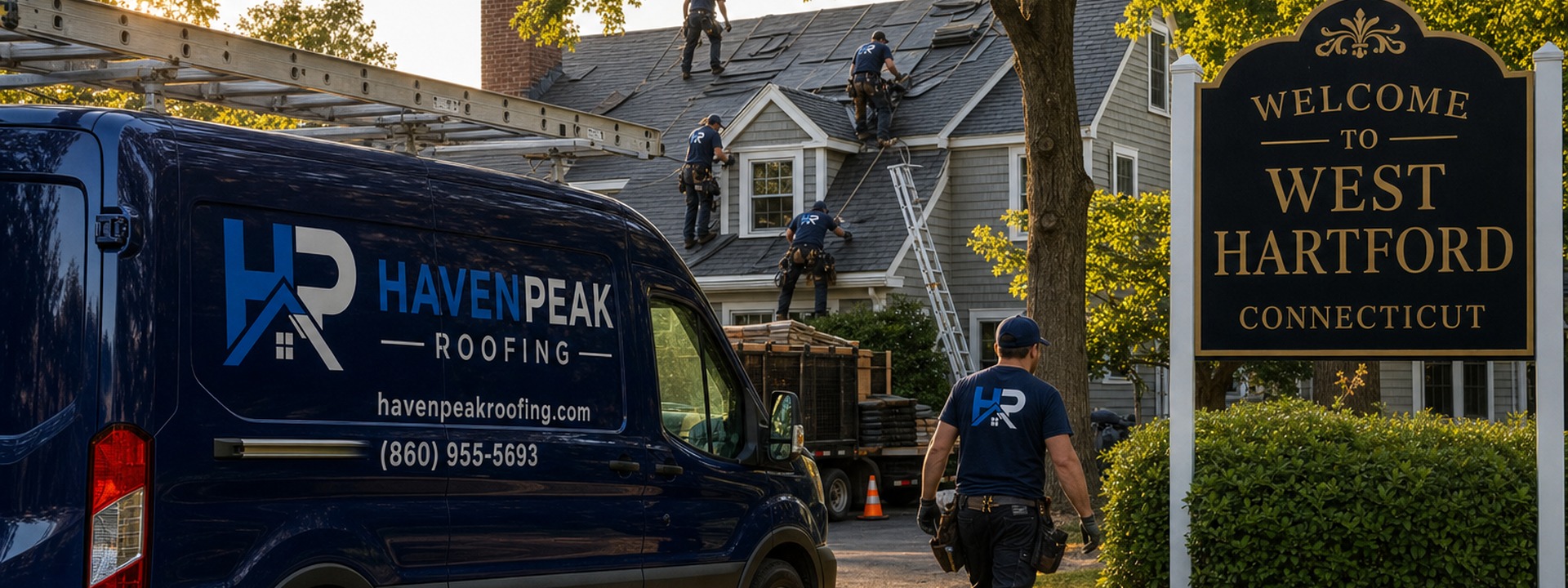
Asphalt Shingle Roofing for Connecticut Homes
Architectural shingles dominate Greater Hartford neighborhoods for good reason—they balance cost, wind resistance, and repairability. We install, maintain, and repair shingle systems with attention to ice barrier, ventilation, and flashing that protect the field.
Benefits of Asphalt Shingles Here
Architectural shingles offer dimensional appearance, solid wind ratings when installed to manufacturer specs, and straightforward localized repair when a branch damages a few tabs. Color and profile variety suit colonial streetscapes from West Hartford Center to Elmwood.
Contractors and suppliers across Hartford County stock common lines, which speeds matching on partial repairs after storms. Shingles also integrate cleanly with existing asphalt on most additions.
For many homeowners, shingles remain the practical default when metal or tile is not required by HOA or structure.
Shingle waste is recyclable in many Hartford County haul routes—ask about jobsite sorting during replacement.
Tile mass can quiet rain noise compared to thin metal when underlayment is robust.
Where Shingles Are Not the Right Fit
Very low slopes below manufacturer minimums need membrane systems, not shingles. Heavy shade and moss-prone north slopes demand more maintenance than open south exposures.
Shorter remaining life on a multi-layer roof may make another shingle overlay inadvisable even if tabs look acceptable from the curb.
Homes with chronic attic heat loss may see premature curling regardless of shingle quality until ventilation and insulation are addressed.
Manufacturers publish minimum slopes; porches below those limits need membrane, not shingle extensions.
How Connecticut Weather Affects Shingles
Freeze-thaw cycles stress seal strips on north slopes; wind events along Albany Avenue hilltops test nailing patterns. Hail bruising may not leak immediately but accelerates granule loss.
Ice dams push water uphill at eaves when heat escapes into the attic. Ice and water barrier at eaves and valleys is standard on replacement projects for good reason.
Summer heat on dark shingles can shorten life on poorly vented roofs—another reason we review attic airflow during every shingle project.
Shingle Types We Install and Repair
Selection depends on slope, exposure, and aesthetic goals.
- Three-tab shingles on older repairs where matching is required
- Architectural laminated shingles for most replacements
- Impact-resistant lines where tree cover drives debris risk
- Ridge cap shingles coordinated with field color blends
- Starter strips and compatible ice barrier products
Ventilation Paired With Shingle Life
Balanced intake at soffits and exhaust at ridge or static vents keeps deck temperatures closer to outdoor air, reducing ice dam fuel and shingle cooking.
Mixed exhaust types—ridge plus gable fans—can short-circuit airflow. We correct those patterns during replacement when soffits are open and accessible.
Ventilation is not optional trim; it belongs in the same conversation as shingle color.
Shingle Repair Scenarios
Wind-lifted tabs, nail pops, and punctures repair with removed-and-replaced courses integrated into existing rows. Ridge and hip caps get individual attention because they fail before fields on many homes.
Valley debris removal and resealing solve some leaks without full slope work. Pipe boot replacement is among the most cost-effective shingle-adjacent repairs.
We avoid caulking over tabs as a permanent strategy—proper integration with underlayment matters.
Hand-sealing lifted tabs in cold weather is temporary until warm bonding days return.
Bird guard and closure foam at ridge ends prevents nest debris that holds moisture.
Shingle Replacement Scope
Full replacement includes tear-off to deck, ice barrier at vulnerable zones, underlayment, starters, field shingles, ridge venting, and new penetration flashings.
Deck repair, drip edge, and chimney reflashing are line items—not surprises mid-job. Color selection should account for how north versus south slopes fade differently over time.
Partial slope replacement happens after storm damage when matching is feasible.
Drip edge replacement during reroof prevents fascia rot discovered only at tear-off.
Batten upgrades during re-tile can improve airflow under the tile field.
Shingle Maintenance Tips
Small habits extend roof life between professional visits.
- Keep gutters clear so eaves do not overflow into fascia
- Remove branch tips resting on shingles after storms
- Avoid pressure washing—granule loss follows
- Schedule periodic inspections after hail or notable wind
- Trim overhanging limbs on wooded lots in Westmoor Park
Shingle Roofs in Local Neighborhoods
Colonials near Elizabeth Park often mix steep main roofs with low porch sections—transition flashing defines performance more than field color. Split-levels in the Acre show uneven aging when additions used different shingle lines decades apart.
HOA communities may restrict color palettes; we provide samples for board approval before ordering.
Matching discontinued three-tab lines on older streets sometimes requires sourcing from surplus dealers or accepting blend courses on rear slopes.
Asphalt Shingle FAQ
You May Also Need
Roof Replacement
Full roof replacement scope, materials, and project planning
Roof Repair
Localized roof repair for leaks, wear, and storm damage in Greater Hartford
Storm Damage Roof Repair
Wind, hail, and debris damage assessment and repair
Roof Maintenance
Seasonal maintenance, ice dam risk, ventilation checks
Request Shingle Roofing Help
Tell us your shingle type, roof age, and any leaks or storm damage.