
Quick Answer
Warm, moist attic air condenses on cold roof decking in winter, rotting plywood, rusting nails, and feeding ice dams at eaves—even when shingles look fine from the street. Fix ventilation balance, route bath fans outside, and seal attic bypasses before blaming field shingles or scheduling unnecessary replacement.
What Attic Moisture Looks Like
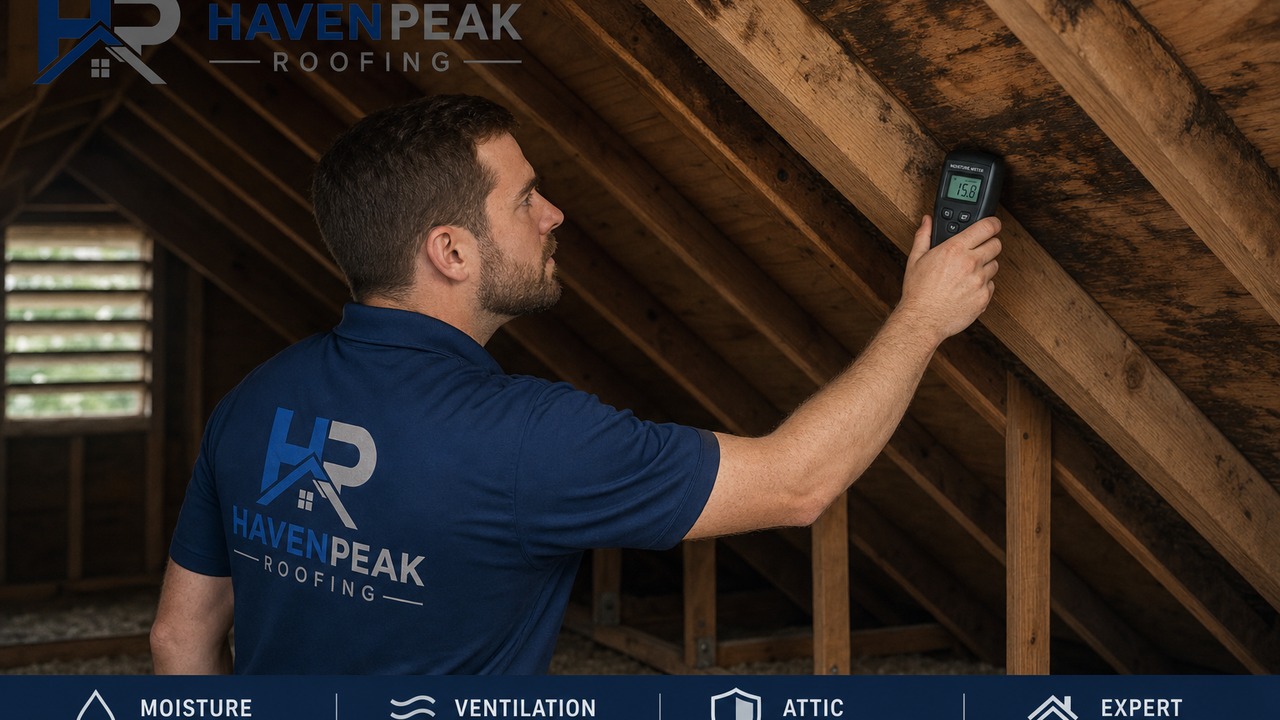
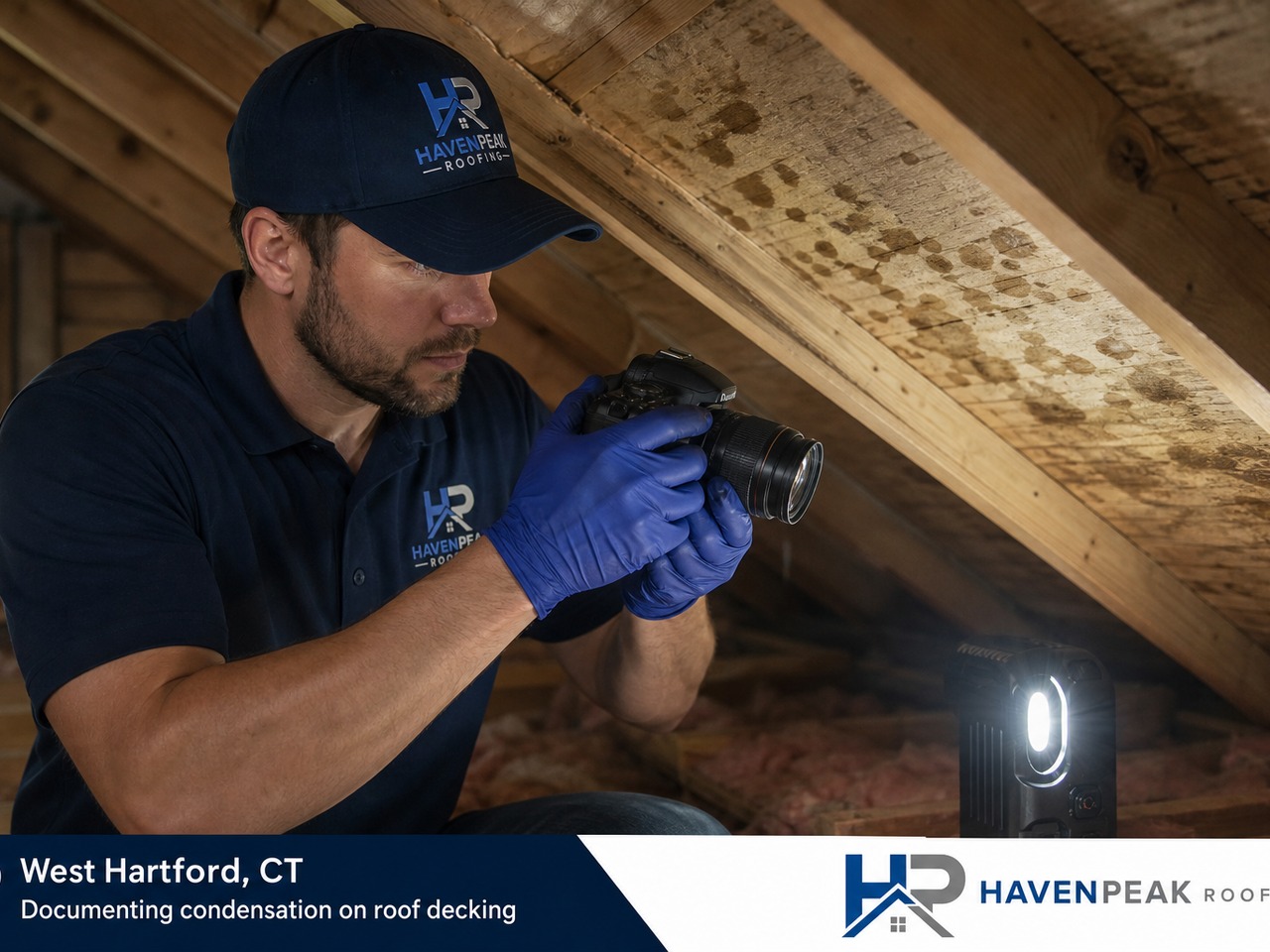
Your attic tells the truth about roof health before exterior shingles do. On cold January mornings, frost on nail tips inside the attic means warm, humid air is reaching the underside of the deck. After thaw, that frost becomes water that drips onto insulation and stains plywood dark along bathroom and kitchen chase lines.
Musty odors, mold on sheathing near ridge vents, and compressed insulation from years of moisture cycling are common in Greater Hartford homes built from the 1960s through 1990s. Ice dams that return after a recent shingle replacement almost always point to heat loss and ventilation imbalance—not bad new shingles.
- Frost on roof nails on mornings below freezing
- Dark staining on plywood near bath or kitchen vents
- Ice dams at eaves despite newer shingles
- Rust streaks on nails and metal connectors
- Bathroom fan discharging into attic instead of outdoors
Ventilation: Intake, Exhaust, and Balance
A ridge vent without open soffit intake is one of the most common post-renovation mistakes in West Hartford and Bloomfield. Exhaust at the ridge pulls air from the path of least resistance—often the attic floor or heated bypasses—instead of drawing cold air up from soffits. The deck stays warm at the ridge, snow melts, and water refreezes at cold eaves.
Balanced ventilation means clear soffit channels (often requiring foam baffles to keep insulation from blocking intake), adequate exhaust at ridge or roof vents, and no mixing of powered fans that fight natural flow. Cathedral ceilings need vent chutes from eave to ridge for every bay; otherwise heat sits against decking with no escape path.
Ventilation corrections pair with roof work during replacement when decking is exposed. Adding ridge vent without fixing blocked soffits can make ice dams worse, not better.
Air Sealing and Fan Routing
Before adding insulation depth, seal attic bypasses: top plates, recessed light housings, chimney chases, and gaps around plumbing stacks. Heat escaping through these paths warms the deck directly above them—creating melt patterns that do not match ventilation diagrams on paper.
Bathroom and kitchen fans must terminate through the roof or gable wall, not into the attic. Flex duct lying on insulation dumps humid air against cold plywood every shower. Homes in Avon and Canton with renovated master baths are frequent offenders when ductwork was never rerouted during interior work.
Whole-house humidifiers set too high in winter add load when the building envelope is leaky. Target humidity levels appropriate for sealed homes, and fix the envelope before chasing roof symptoms.
How Moisture Damages Decking and Shingles
Saturated plywood loses stiffness. Nail withdrawal increases; shingles look wavy or creased along soft deck sections. In summer, trapped moisture accelerates shingle aging from underneath—granule loss and cupping on south slopes may reflect attic heat as much as sun exposure.
When decking is soft near eaves after ice dam seasons, repair requires removing shingles locally, replacing damaged sheathing, installing ice-and-water membrane at the eave, and correcting ventilation before reroofing. Patching shingles over rotten deck guarantees another leak the next thaw.
Roof maintenance plans that include attic moisture checks catch these conditions before emergency January calls.
Greater Hartford Housing Patterns
Capes and ranches in Newington and Rocky Hill often have vented soffits covered with insulation during DIY attic projects. Colonials in Glastonbury with finished third floors may lack rafter venting in knee walls. Triple-deckers in Hartford and East Hartford combine low-slope sections with steep slopes—each zone needs its own ventilation strategy.
Matching fixes to construction era matters more than generic advice to "add more ventilation." An inspection with attic photos documents intake, exhaust, bypasses, and decking moisture before recommending scope.
What to Do Next
Enter the attic on a cold morning if safe—standing on joists or boards, not insulation or drywall. Note frost, stains, and fan terminations. Do not disturb asbestos-containing vermiculite insulation if present; call a professional for assessment.
Schedule a roof inspection from our West Hartford office or call (860) 955-5693. Ask specifically for attic ventilation and moisture documentation. Pair findings with ice dam prevention guidance if eave icing is part of the pattern.
Related reading
Related service: Learn more about this roofing service.
Related guide: Ice Dam Prevention for Connecticut Homes.
FAQ
Yes. Heat and moisture from below age shingles prematurely and rot decking. Installing new shingles without fixing ventilation wastes the investment.
Code and manufacturer guidelines use net free area ratios based on attic square footage, split between intake and exhaust. A professional measures existing vents and blocked soffits before specifying additions.
Only with working soffit intake. Ridge vent alone on a blocked soffit attic can worsen heat loss patterns at the ridge.
Seal bypasses first, then insulate without blocking soffit channels. Deep insulation without baffles chokes intake air.
When decking is soft across large areas or multiple leak paths have saturated insulation. Localized soft spots may be repairable if ventilation is corrected.
Need help with your roof in Connecticut? Contact HavenPeak Roofing for a free estimate or call (860) 955-5693. We serve West Hartford, Greater Hartford Area, and nearby Connecticut communities.
Browse our Roofing Insights hub and Roofing Solutions catalog for more Connecticut winter guides, emergency services, and city-specific roofing pages.