
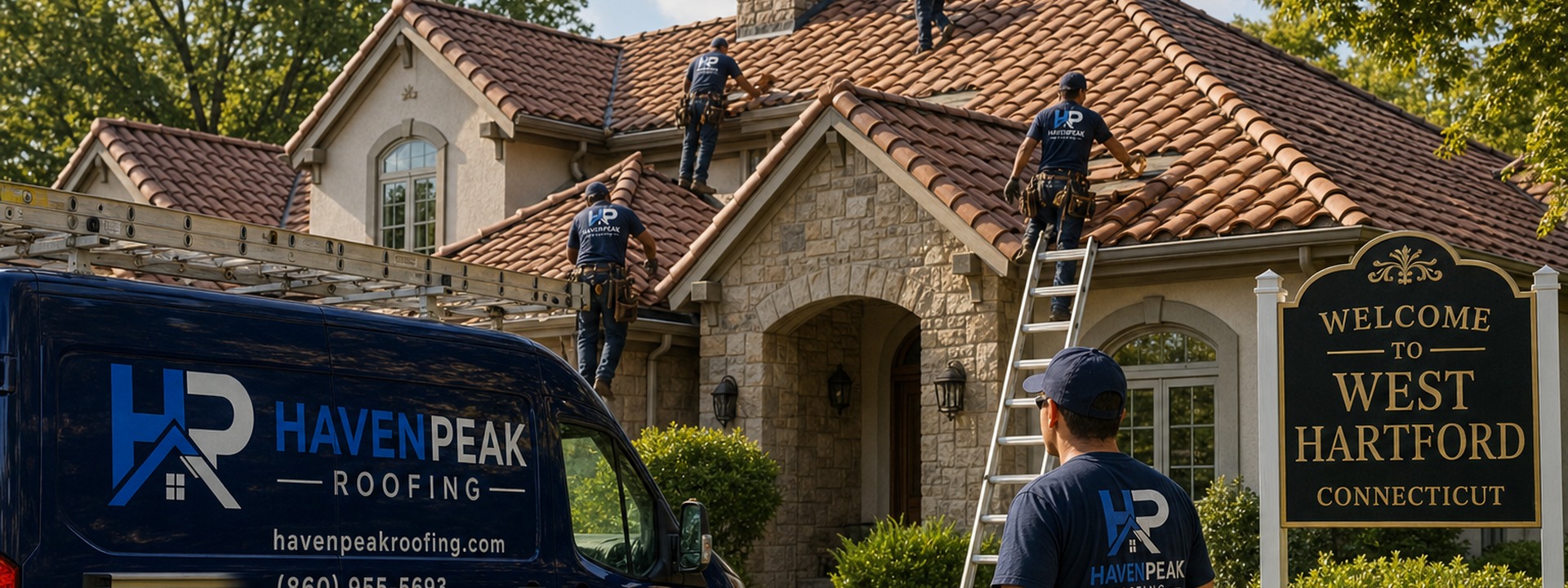
Tile Roofing and the Underlayment Beneath It
Tile surfaces can last decades, but the underlayment and flashings beneath them face Connecticut freeze-thaw and wind-driven rain daily. We repair slipped units, replace failed waterproof layers, and plan full tile reroofs on the select Greater Hartford homes that use clay or concrete tile.
Benefits of Tile on Suitable Homes
Clay and concrete tile offer distinctive profiles, fire resistance, and long surface life when foot traffic and weather are managed. Custom builds and Mediterranean-influenced designs near West Hartford’s western ridges occasionally specify tile for street presence.
Individual units can be replaced when broken without disturbing entire slopes—if underlayment remains sound.
Weight distribution matters: tile roofs are not interchangeable with asphalt without structural review on older framing.
Tile pairs well with heavy massing on homes engineered for the load.
Limits of Tile in This Climate
Weight demands structural review on older framing not designed for tile. Freeze-thaw cycles stress mortar-set systems if underlayment fails and water enters the assembly.
Walking the roof without pads breaks units and underlayment. Ice dams at eaves still threaten waterproof layers even when tile looks intact.
Matching discontinued profiles is harder than asphalt; inventory hunts add time.
Mortar-set versus foam-set ridge systems determine how we approach freeze-thaw repairs at hips and ridges.
Tile Repair and Maintenance
We replace cracked or slipped tiles, rebuild ridge and hip mortar or foam-adhered systems per original design, and address valley corrosion under tile pans.
Leak tracing often points to underlayment age—not visible tile chips. Partial lifts expose paper or self-adhered layers that failed silently.
Skylight and chimney flashings around tile need custom pans; caulk on tile surfaces is not a durable fix.
Underlayment lifts for localized repair must be reintegrated before tiles reset—rush jobs leak at the patch line.
Underlayment and Full Tile Replacement
Full projects include removal to deck, upgraded underlayment rated for freeze-thaw, drainage mats when specified, and reset or new tile per structural load.
Conversion to asphalt sometimes makes sense when structure cannot support re-tile; we discuss aesthetics and weight honestly.
Long lead times for specialty tile orders require planning before winter.
Tile-look metal or high-grade asphalt may be discussed when structure or budget favors alternatives.
Tile Roofing in Greater Hartford
True tile roofs are uncommon compared to asphalt on West Hartford streets; most calls involve one-off custom homes or imported profiles on recent builds.
HOAs with strict appearance rules may prefer tile-look metal or asphalt when original tile is discontinued.
We coordinate crane access on tight lots when pallet delivery cannot reach the backyard.
Tile Roofing FAQ
You May Also Need
Roof Replacement
Full roof replacement scope, materials, and project planning
Roof Repair
Localized roof repair for leaks, wear, and storm damage in Greater Hartford
Roof Flashing & Waterproofing
Flashing, transitions, ice barrier, chimney interfaces
Roof Inspection
Pre-purchase, seasonal, and post-storm roof assessments
Request Tile Roofing Help
Describe tile type, leak location, and roof age if known.